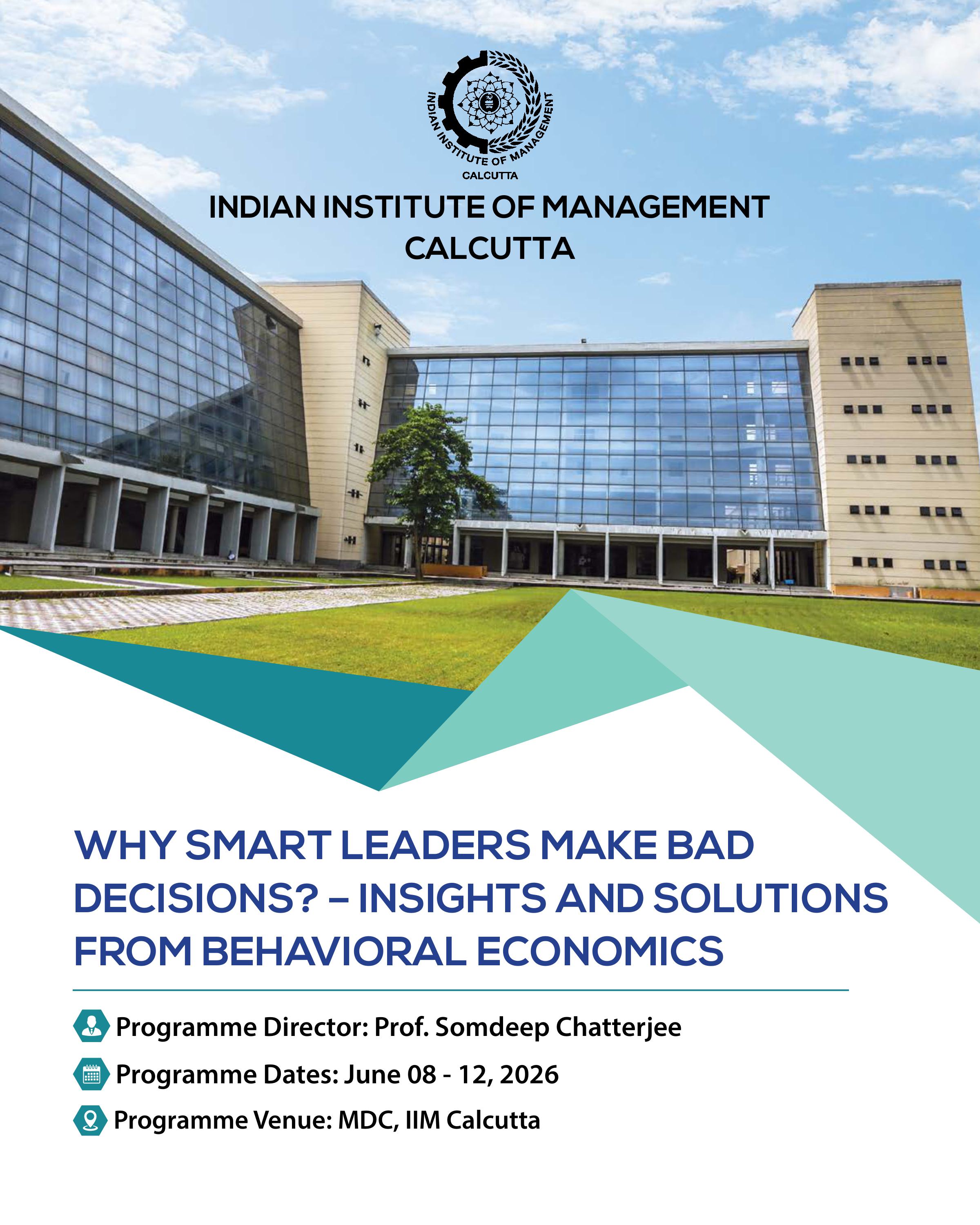







Programme Overview
Smart leaders make bad decisions more often than they realize. Incentives that look perfect on paper fail in practice. Change initiatives stall. High performers disengage. Despite experience and expertise, managers across organizations repeatedly encounter predictable decision failures. These failures are rarely accidental. They arise from deep-seated behavioral biases that influence how people interpret information, evaluate risk, respond to incentives, and engage with change. Behavioral economics offers a powerful framework to understand and correct these patterns.
This programme enables leaders to diagnose the psychological drivers of poor decisions and redesign systems to improve performance. Participants will learn how to overcome bias in judgment, build motivation beyond money, manage resistance to change, and use choice architecture and nudges to influence behavior ethically and effectively. The programme blends cutting-edge behavioral research with practical business applications across strategy, human resource management, operations, and leadership.
As organizations and governments increasingly adopt behavioral science through dedicated behavioral insights teams and nudge units, this programme prepares managers to apply these tools rigorously and responsibly in real organizational settings. The programme combines behavioral theory with hands-on managerial applications through cases, experiments, and real-world examples. Consequently, participants will learn how to design effective incentives, build better choice environments, and implement nudges that improve performance, engagement, and compliance. Designed for managers, consultants, and transformation leaders, this programme responds to a growing global emphasis on behavioral science in organizations, with firms creating dedicated behavioral insights teams and governments establishing nudge units, including the Behavioural Insights Unit of NITI Aayog in India. Participants will leave with a practical behavioral toolkit to diagnose problems, design interventions, and rigorously evaluate what works in their organizations.
Programme Objective
- Diagnose why smart managers make systematic decision errors in areas such as strategy, hiring, performance appraisal, and investment planning
- Design motivation systems that will actually work by understanding why traditional incentives, targets, and bonuses often fail
- Identify and mitigate behavioral biases such as overconfidence, anchoring, and herd behavior in individual and group decision making
- Manage resistance to change more effectively by understanding the psychological barriers that prevent adoption of new processes, technologies, and initiatives
- Apply choice architecture and nudges to influence employee and customer behavior ethically and effectively
- Design, implement, and test behavioral interventions to improve performance, compliance, and engagement within organizations
- Build a practical behavioral toolkit to systematically diagnose problems, design solutions, and evaluate what works in real organizational settings
Key Topics
- Why intelligent, experienced leaders repeatedly make predictable mistakes
- Why large bonuses, targets, and incentives often backfire
- How to redesign motivation when traditional performance management fails
- How to overcome resistance to change without coercion
- How to use nudges and choice architecture to drive behavior at scale
- How to reduce bias in hiring, appraisal, and promotion decisions
- How to improve forecasting, planning, and risk assessment
- How to test and measure whether behavioral interventions actually work
- How to use behavioral science ethically in organizations
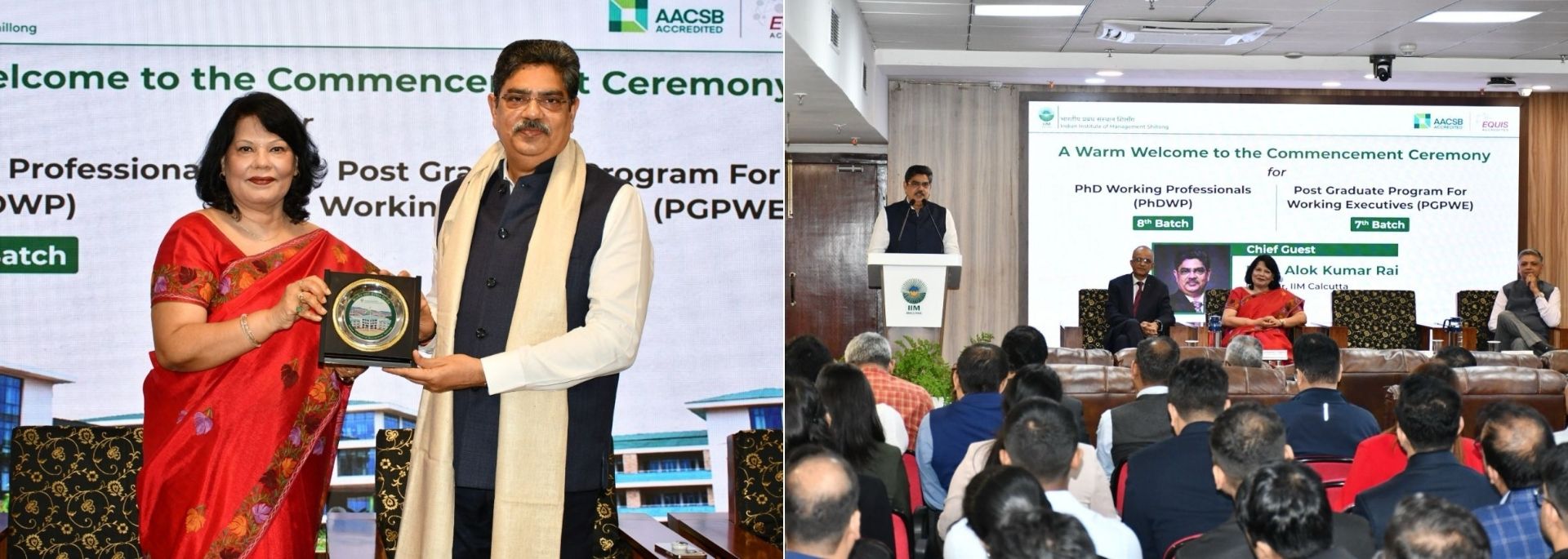
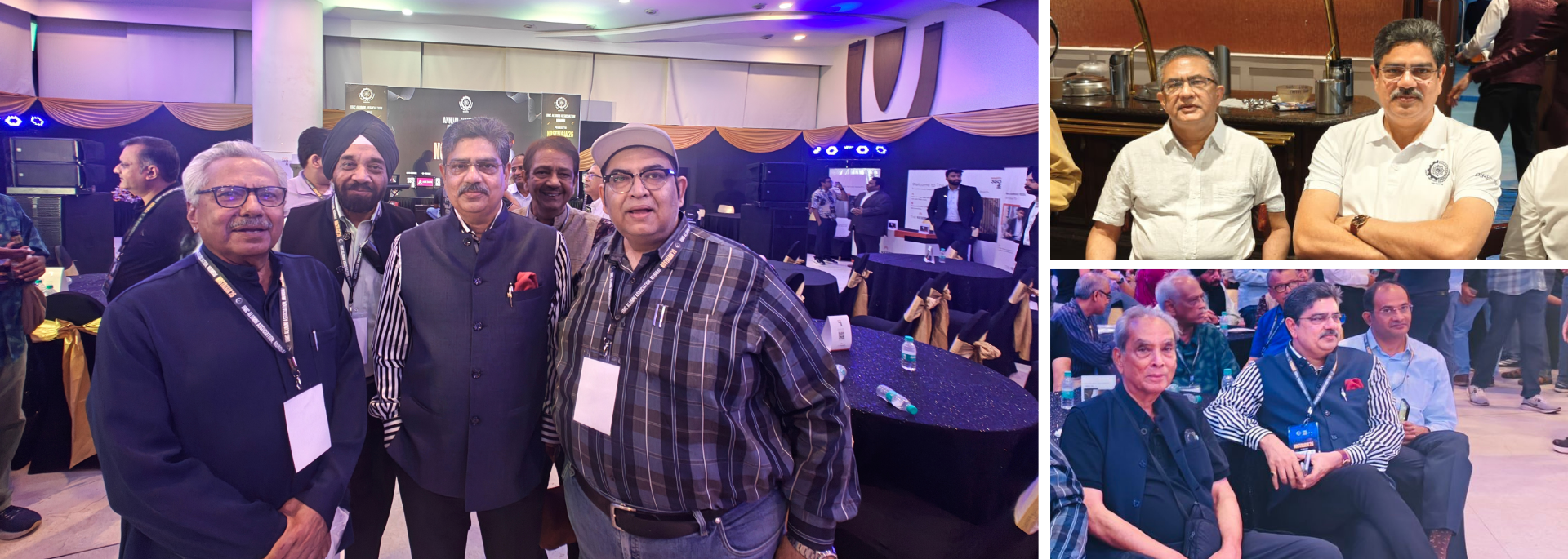
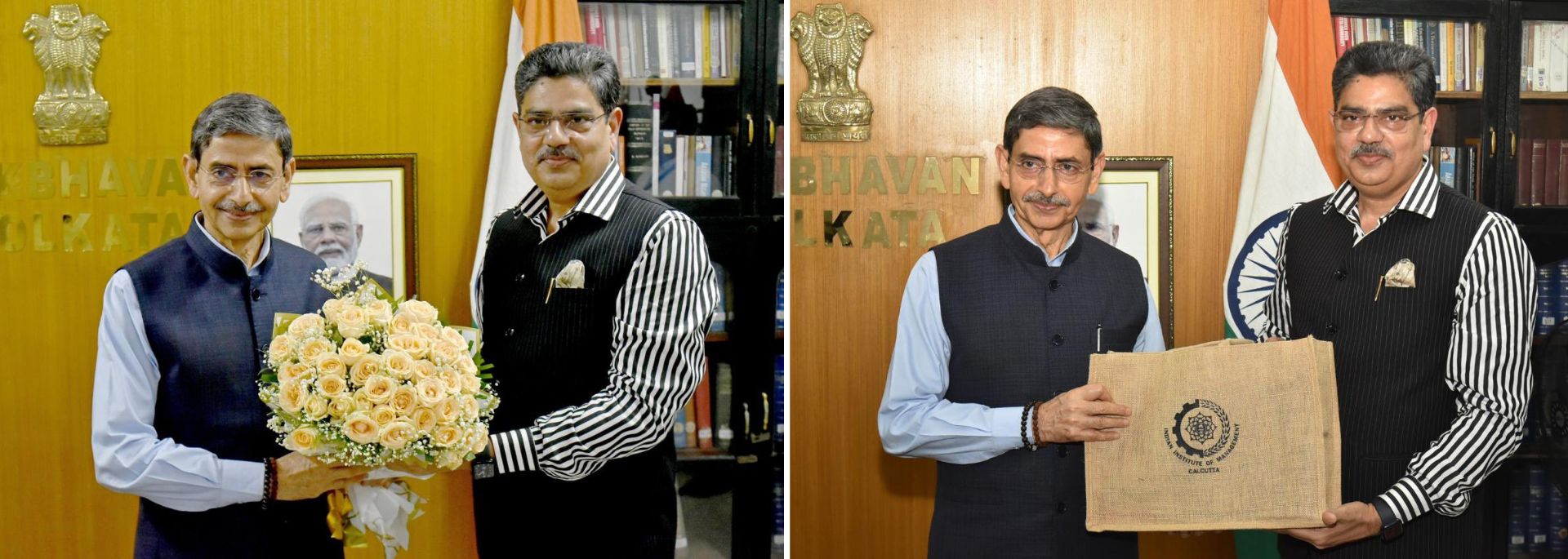
Programme Directors

Who May Attend
This programme is designed for managers and leaders who are responsible for driving performance, managing people, and leading change.
It is particularly relevant for:
- Mid-level and senior managers involved in strategy, business planning, and operational decision making
- HR, Talent, and Organizational Development leaders responsible for performance management, motivation, engagement, and culture initiatives
- Transformation, change, and digital leaders managing large-scale organizational change and adoption
- Consulting managers and engagement leaders advising organizations on performance improvement, organizational design, and behavioral change
- Public sector and PSU leaders involved in reform, modernization, and service delivery improvement initiatives
- Entrepreneurs and founders building organizations, teams, and performance systems from the ground up
Programme Duration and Delivery
- From the morning of June 08, 2026 till the afternoon of June 12, 2026
- Face to face - classroom based
Pedagogy
The programme follows a highly interactive, application-oriented pedagogy designed to translate behavioral insights into practical managerial tools. The learning experience blends conceptual understanding with hands-on application through:
- Interactive lectures and discussions: These introduce core behavioral concepts and link them directly to real managerial challenges in leadership, strategy, HR, and operations
- Live behavioral experiments and simulations: These are conducted during the programme to help participants experience biases first-hand and analyze their impact on decision making
- Hands-on design of behavioral interventions: Here, participants create and test nudges, incentives, and choice architectures relevant to their own organizational contexts
- Case discussions and facilitated problem-solving sessions: This is where participants apply behavioral economics to business situations involving performance management, change initiatives, customer behavior, and organizational culture
- Group exercises and peer learning: This is done to encourage cross-industry perspectives and practical exchange of ideas
The emphasis throughout is on learning by doing, enabling participants to leave with tools and frameworks that can be immediately applied in their organizations.
How to Apply
- You can apply/nominate your personnel by clicking on the “Apply Now” link corresponding to the particular MDP, as appearing on our online calendar available at: https://iimcal.ac.in/mdp/mdp-calendar
- Once the candidature(s) is (are) approved, the sponsoring authority or participant (in case of self-nomination) will be intimated over email along with a Proforma Invoice seeking programme fees in advance.
- Programme fees can be remitted online through Electronic Fund Transfer (NEFT/RTGS).
- Upon remitting the fees online, kindly intimate Executive Education Office with the UTRNo. /relevant transaction details through email, so that we can connect your remittance to your nomination(s). Please note that confirmation of participation is subject to receipt of Programme fees by CMDP Office before commencement of the MDP.
For further assistance, please connect with:
Name: Ms. Payel Majumder
Number: +91 33 7121 6012
Email ID: program_mdp[at]iimcal[dot]ac[dot]in
Programme Brochure