



Programme Overview
Consequent to decades of information technology deployment, organizations today have more information at hand than ever before. But in many cases, the information is not being utilized to out-think the rivals. Thus, organizations are missing out on a potent competitive tool.
Business Analytics is about quantitative analysis and predictive modeling towards data-driven competitive strategies. Exemplars of analytics are using tools to identify their most profitable customers; offer the right price, accelerate product innovation, optimize supply chains; identifying the true drivers of financial performance etc. Organizations as diverse as HSBC, PepsiCo, Amazon, Netflix, Barclay's, Capital One, Paytm, and Procter & Gamble illuminate how to leverage the power of analytics. Competence in analytics along with the ability to handle big-data has become a critical skill for managers of the new age business organizations.
This executive long-distance programme would have modules such as Statistics and Mathematics for Business Analytics, Machine Learning, Deep Learning & GenAI, Data Platform, Data Visualization, Predictive Modelling, Financial Analytics, Marketing Analytics, Operations Analytics, and others. The overall value gained at the end of the programme is expected to build a solid foundation of business analytics, transforming multiple industrial domains.
Programme Objective
- The Program provides excellent executive education in the field of Business Analytics.
- It would help improve managerial and leadership capabilities of participants.
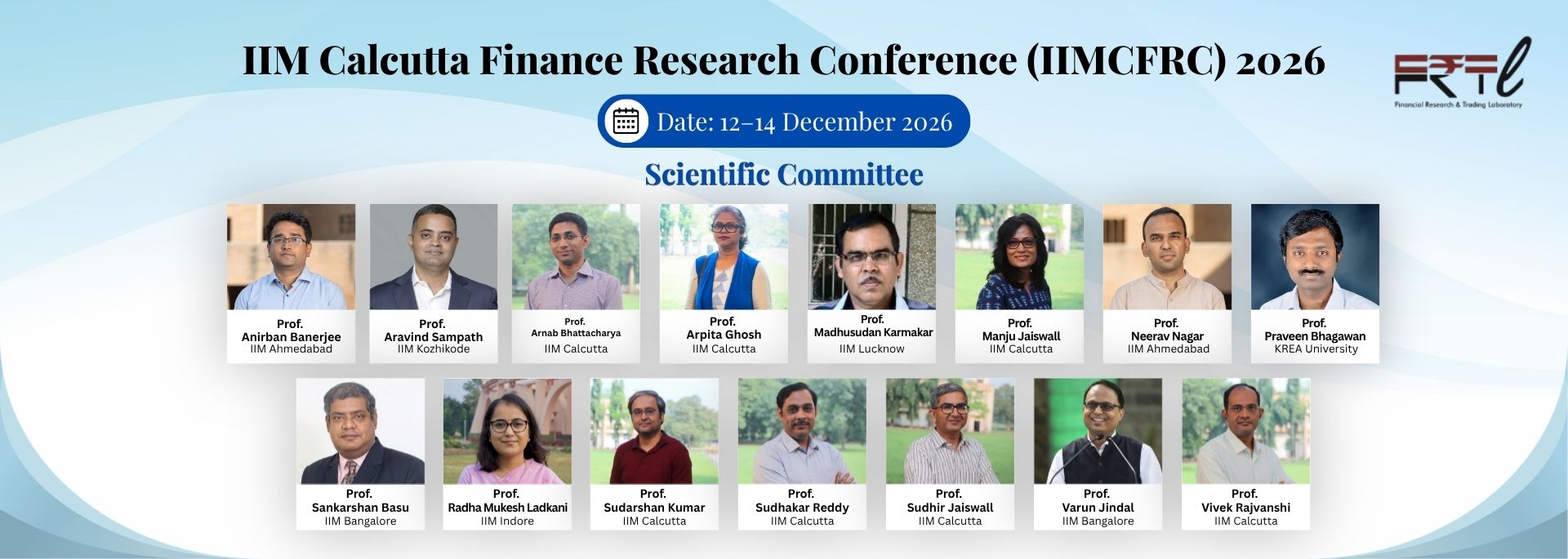
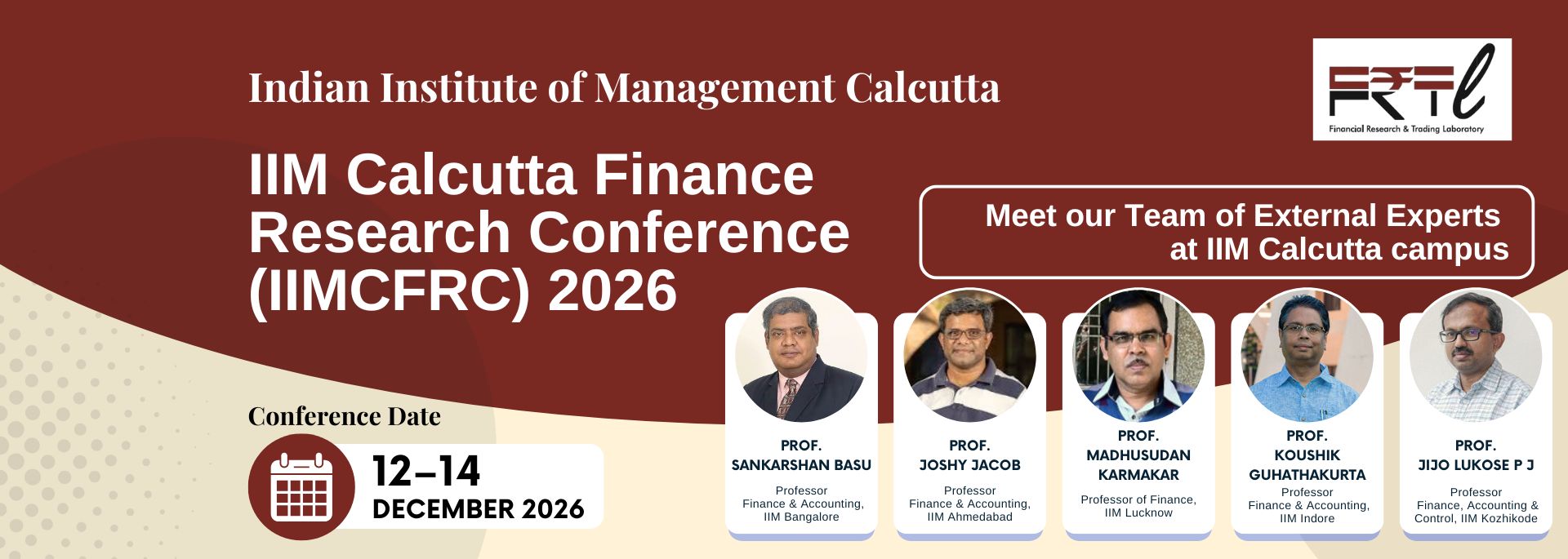
Programme Directors


Who Should Attend
Professionals interested to build a career in Analytics. The programme would demand adequate familiarity with high-school level mathematics:
- At least graduation / post-graduation with minimum 50% marks
- Minimum 3 years of work experience and currently employed
- Screening & selection will be done by IIMC
- Professionals interested to build a career in Analytics. The programme would demand adequate familiarity with high-school level mathematics.
Eligibility
- At least graduation / post-graduation with minimum 50% marks
- Minimum 3 years of work experience and currently employed
- Screening & selection will be done by IIMC
Programme Duration and Delivery
The duration of the programme is one year. Sessions will be held once a week for three hours on Sundays (9:00AM-12:00PM).
There will be 2 campus visits spanning 6 days (3+3 days respectively for each visit) in total.
Pedagogy
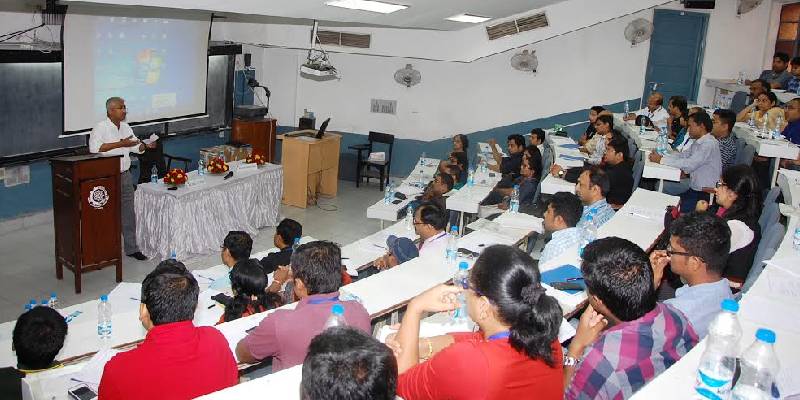
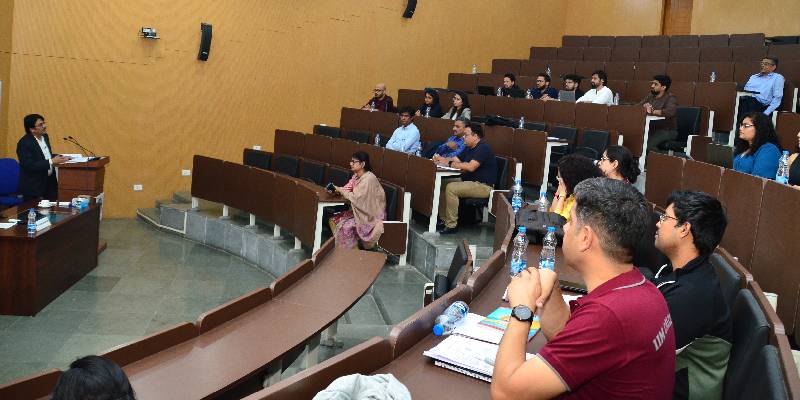
The pedagogy will be highly interactive. It will leverage the use of technology and will consist of a judicious blend of lectures, real-life case studies, quizzes, and assignments.
Programme Content
Annexure A
Pre Course Module A
Fundamentals of Data and Analytics
- What is data, Types of data
- Introduction to data, big data, and analytics
- Introduction to data analysis: Similarities and dissimilarities of descriptive, predictive, and prescriptive analytics
Fundamentals
Module 1: Data Visualization
- Visualization principles and storytelling
- Tools: Excel, Python
- Dashboard design
- Data storytelling for executives
Module 2: Statistics and Mathematics for Business Analytics
- Different Sampling Techniques & Random Variables
- Probability, distributions, Estimation: hypothesis testing
- Linear algebra and optimization
Module 3: Machine Learning
- Fundamentals of ML lifecycle and business problem framing
- Bias-variance tradeoff and model selection
- Model evaluation metrics (ROC, AUC, precision-recall)
- Feature engineering and model optimization
Module 4: AI/ML Applications in Python
- Python for AI model Deployment
- Storytelling using Python
- Big Data analytics using Python
Module 5: Predictive Modelling Using Time Series data
- Time Series data Properties: Stationarity Vs Nonstationary
- Forecasting using Linear Time Series model
- Forecasting using Multivariate Time series model
Advanced Topics
Module 6: Data Storage Topics: Cloud, Data Platforms
- Data lakes vs data warehouses
- Cloud platforms
- Data storage and Management
Module 7: Supervised and Unsupervised Learning
- Regression, classification models
- Clustering and segmentation
- Association rules and recommender systems
- Ensemble methods (bagging, boosting)
Module 8: Digital Transformation and Competitive Advantage with AI & Analytics
- Industry 4.0, IoT, and analytics
- Predictive maintenance
- Digital twins
- AI in process automation (RPA + AI)
- Platform business transformation using data
Module 9: ML Advances: Deep Learning , GenAI and Agentic AI
- Neural networks, CNN, RNN
- NLP basics
- Transformers and LLMs (GPT, BERT)
- Prompt engineering for business use cases
- Generative AI applications (content, code, analytics automation)
- Agentic AI in enterprises
- Workflow with agentic AI
Business Applications of Data Analytics
Module 10: Financial Analytics
- Portfolio analytics and risk-return
- Algorithmic trading basics
- NLP on financial reports (sentiment analysis)
Module 11: Marketing Analytics
- Customer segmentation and targeting
- Campaign analytics and ROI
- Digital marketing analytics
Module 12: Operational Analytics
- Process optimization
- Supply chain analytics
- Simulation models and optimization techniques
- AI in logistics and demand forecasting
Module 13: Cyber Analytics
- Cyber threat detection
- AI in fraud detection
- AI in anomaly detection
Module 14: Responsible AI & Ethics in Analytics
- Bias, fairness, transparency
- Explainability in AI
- Data privacy and governance
- AI regulations
- Ethical use of GenAI in business
Module 15: Network Analytics : 3 hours
- Social network Analytics
- Network Centrality
- Information Diffusion
Module 16: Causality and Business Impact 3 hours
- Causal inference vs correlation
- Causal Inference : Experimental designs
- Application using Program evaluations
Capstone Project
- Solve a real business problem using analytics
- Industry dataset-based project
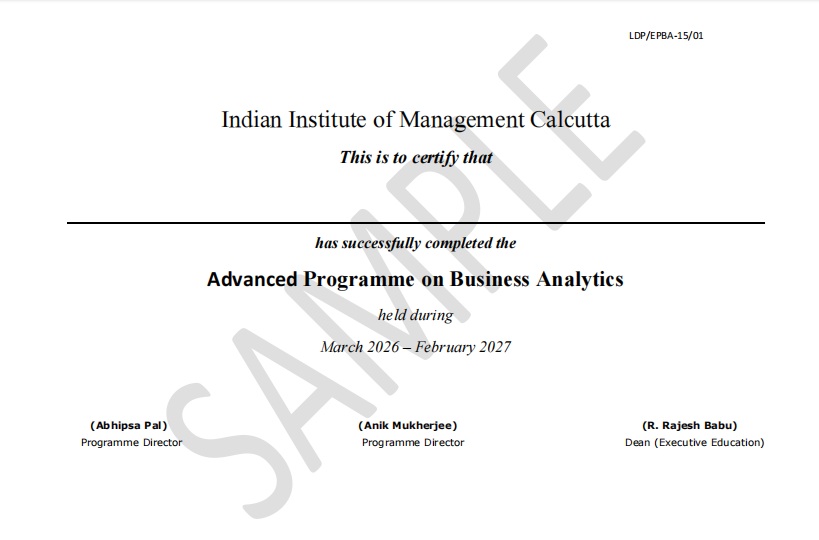
Programme Sample Certificate
Alumni Status
- LDP participants who complete the programme successfully become the Alumni of IIMC Executive Education, which currently has over 35,000 members.
- LDP Alumni are given an email-id in the IIM Calcutta domain.
- LDP Alumni can register in the IIM Calcutta Alumni portal either with this email-id or with their personal email-ids. The IIM Calcutta Alumni portal is a common platform for Alumni of all programmes of the Institute to interact with each other and stay connected with the Institute.
- The Institute shares newsletters, important news and articles about the Institute and its activities, the achievements of the Institute's faculty, staff, students and alumni, upcoming events and programmes etc., on the portal.
- Alumni can post their achievements, write about jobs or LIVE project opportunities for other alumni to see.
- The IIM Calcutta alumni network can also be accessed on mobile phones through the mobile app.
- Executive Education Alumni are entitled to a discount of 5% on the programme fee if they opt to do another LDP.
- By using the different features of the IIM Calcutta portal, alumni across programmes can engage with each other in many meaningful ways. It is up to the alumni themselves to leverage the platform
How to Apply
For further details and for downloading the application form please visit: https://timespro.com/executive-education/iim-calcutta-executive-programme-in-business-analytics-epba?utm_source=institute&utm_medium=institute&utm_campaign=IIMC_APBA_16_Institute_Leads_P-02296
Contact Person
E-mail Id:
naahin[dot]arif[at]timesgroup[dot]com
Contact Number: +91 9795555570