14th Case Method Workshop:
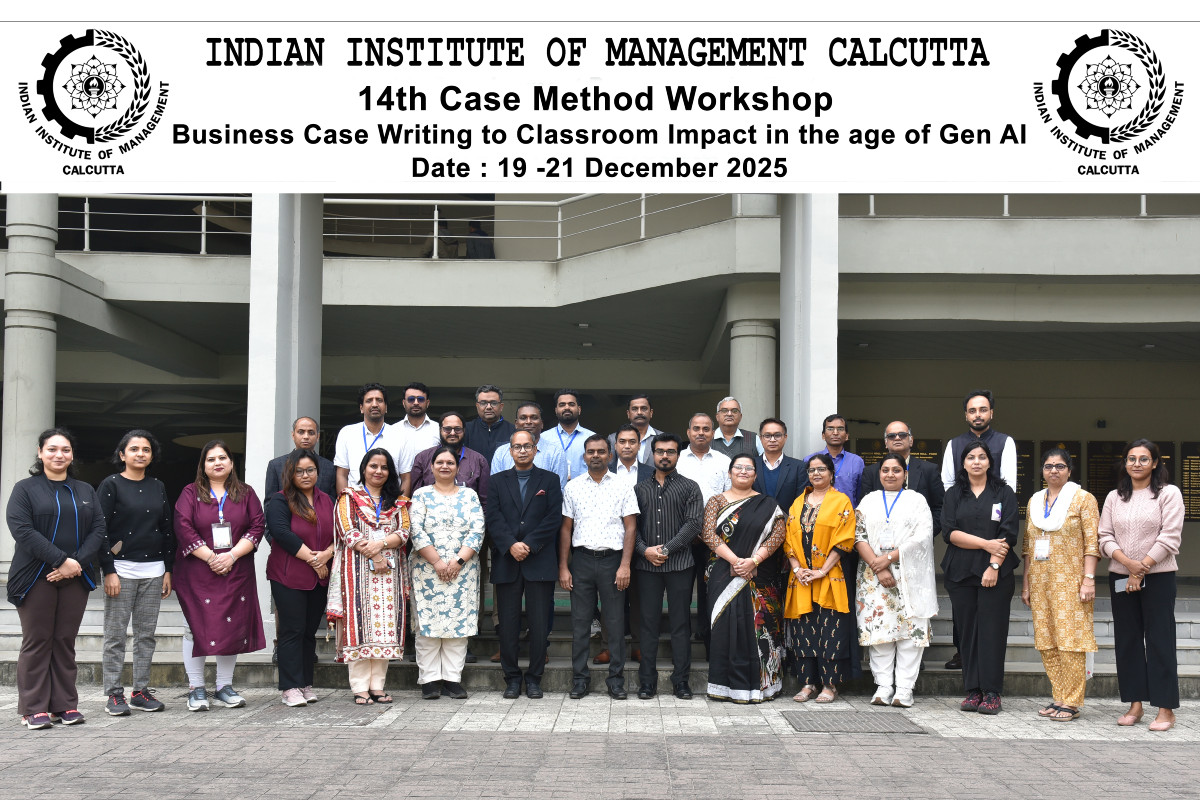
The IIM Calcutta Case Research Centre (IIMCCRC) successfully hosted the 14th Case Method Workshop on “Business Case Writing to Classroom Impact in the Age of Gen AI” from 19th to 21st December 2025.
The three-day immersive programme brought together faculty members and research scholars from across institutions, including, Jaipuria Institute of Management, Goa Institute of Management, National Institute of Technology Tiruchirappalli, K J Somaiya Institute of Management, and more, with the objective of strengthening case pedagogy in response to the transformative influence of Generative AI in management education. The workshop was formally inaugurated by Prof. Dharma Raju Bathini, Faculty Coordinator, IIMCCRC who highlighted the evolving relevance of case writing in the age of Generative AI. In his address, he emphasised the responsible use of AI-driven writing tools, outlining how faculty can strategically leverage these technologies to enhance case development while effectively managing classroom engagement and learning outcomes
The workshop was designed to provide participants with both conceptual clarity and hands-on experience in developing, refining, and teaching business cases in a rapidly evolving academic and technological landscape. It underscores IIMCCRC’s sustained focus on strengthening practice-driven case pedagogy and nurturing a rigorous ecosystem for the development and dissemination of high-quality teaching cases
Workshop Structure and Academic Focus
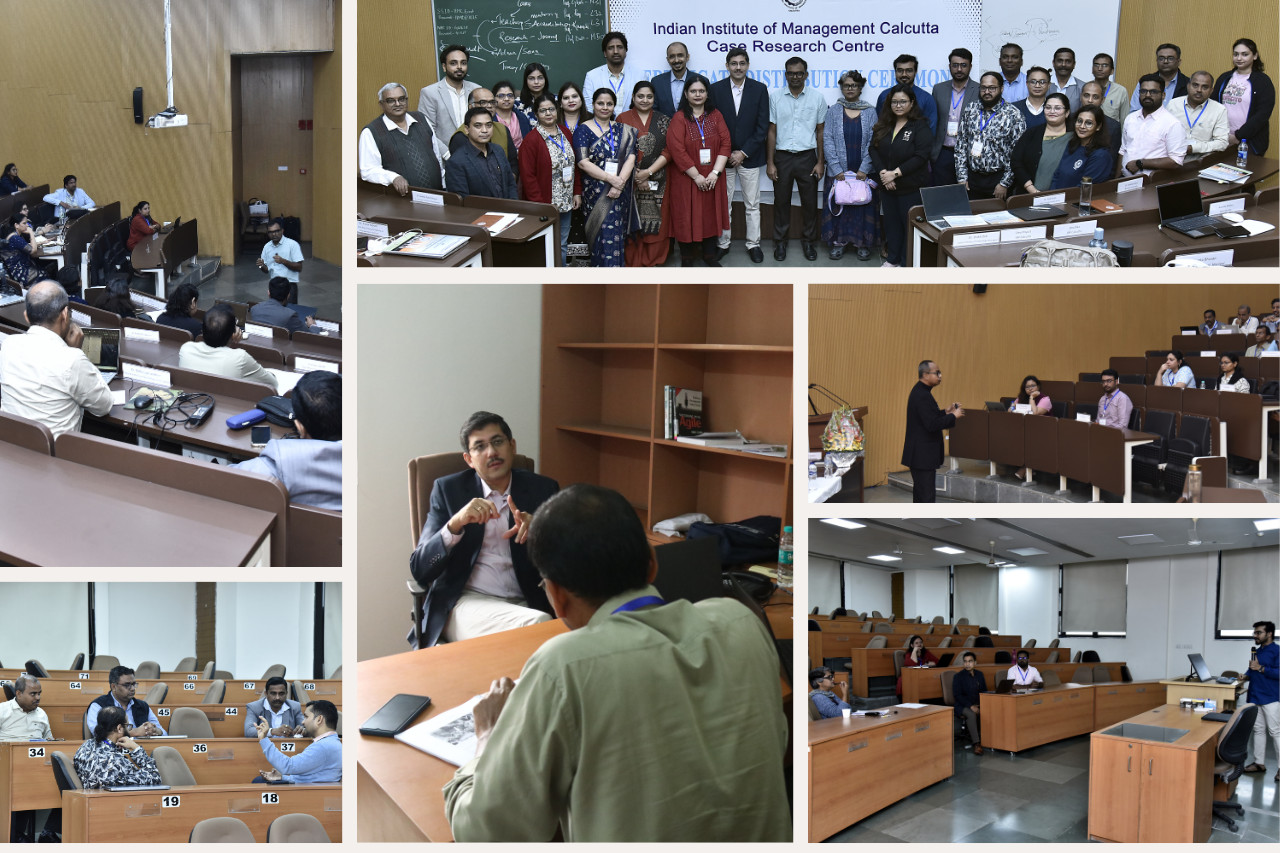
Day 1 focused on understanding the role of AI in case research and writing. Participants explored the possibilities and limitations of AI-enabled tools for ideation, data analysis, and evaluation, while critically examining ethical considerations and the importance of academic rigour in case development.
Day 2 centred on the pedagogical backbone of case teaching—the Teaching Note. Under the guidance of Prof. Ashok Som, participants engaged in an intensive practicum format, where they developed case plans, articulated learning objectives, and refined classroom strategies. Structured peer and faculty feedback helped participants strengthen narrative flow, analytical depth, and classroom engagement.
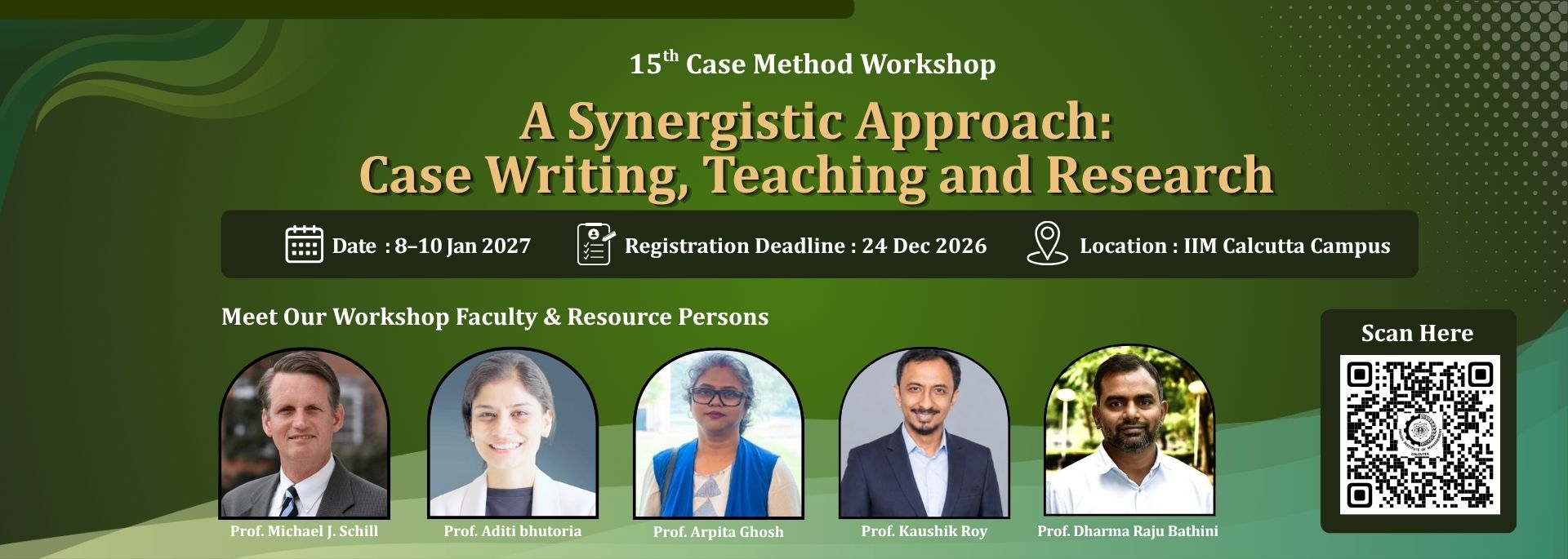
Day 3 led by Prof. Dharma Raju Bathini, addressed pathways to global case publication and strategies for overcoming common research and writing challenges. The day also featured interactive breakout sessions with IIM Calcutta faculty members—Prof. Kaushik Roy, Prof. Arpita Ghosh, Prof. Avinash Kumar, and Prof. Saikat Dutt—providing participants with valuable insights into diverse disciplinary perspectives and publishing expectations.
Case Plan Reviews and Academic Mentorship
A key highlight of the workshop was the detailed review of participant case plans by senior faculty members. The workshop benefited greatly from the time and expertise of Prof. Amit Dhiman, Prof. Debabrata Chatterjee, Prof. Ramendra Singh, Prof. Sudarshan Kumar, and Prof. Balaram Avittathur, whose constructive feedback helped participants enhance the academic robustness, pedagogical clarity, and publication readiness of their cases.
Participant Feedback and Outcomes
Participant feedback reflected the strong academic value and practical relevance of the workshop:
- End to end integration of case writing, TN, classroom delivery and Gen AI within single coherent pedagogical architecture. – Dr. Shakti Deb, IIT Kharagpur
- Effective use of generative AI; use of different chatbots in crafting a case study and teaching note; use of specific prompts. – Dr. Anand Sasikumar, SDM Institute for Management Development
- The most valuable part of the workshop is: how to write a case; develop & design a teaching note; personalized feedback of the case prepared; AI prompt for writing a case. – Dr. Anusha Agarwal, I.T.S School of Management
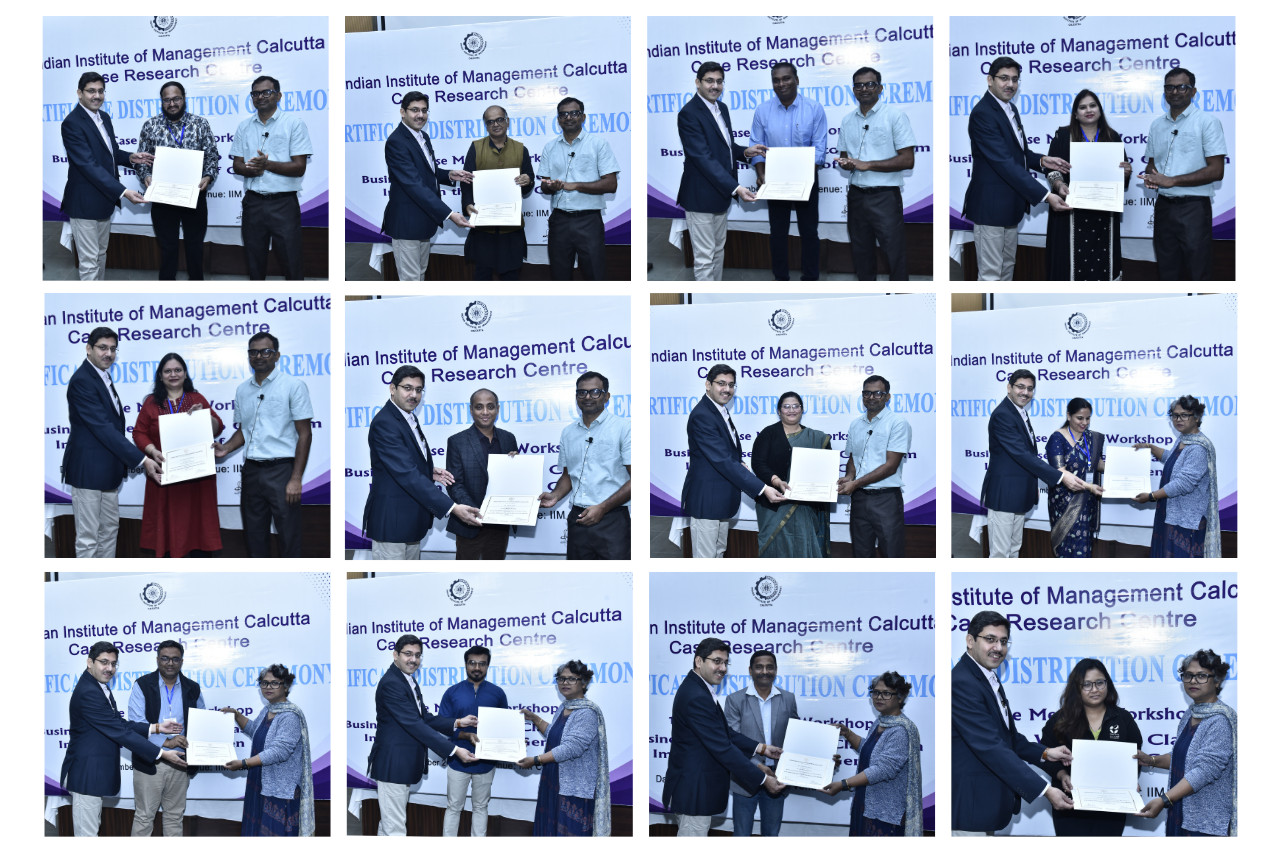
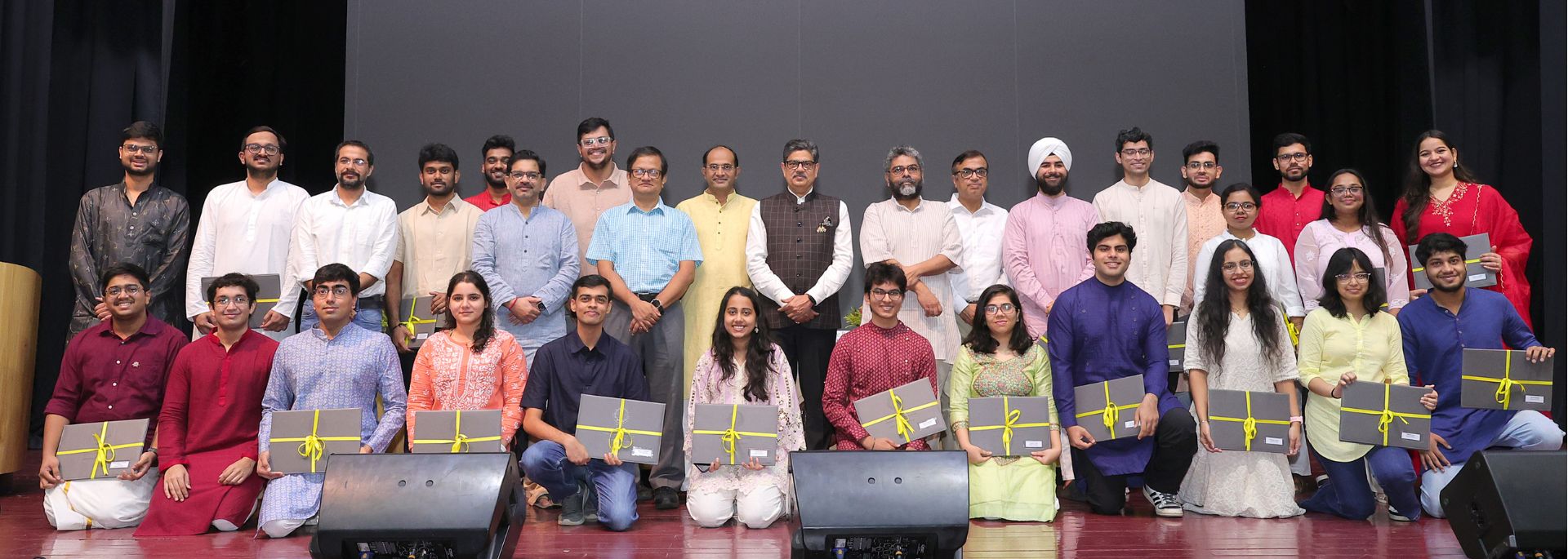
The workshop concluded with a certificate ceremony, marking the successful completion of the programme and the readiness of a new cohort of educators to confidently design, teach, and publish cases in the age of Gen AI. The 14th Case Method Workshop reaffirmed IIMCCRC’s commitment to advancing excellence in case research, pedagogy, and faculty development.